
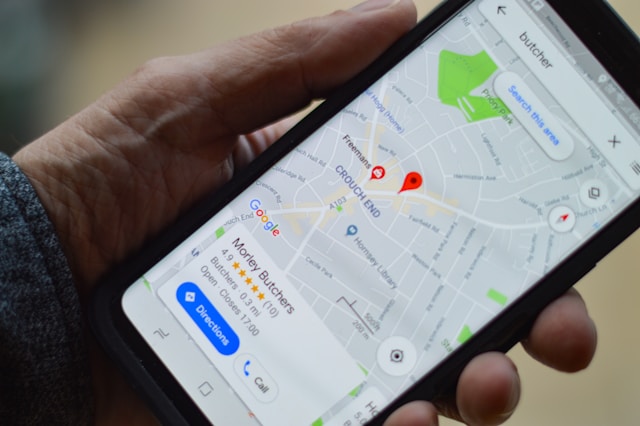
We tested 7 AI travel apps to find out which ones actually help you plan a trip. Mindtrip leads for full planning, Layla for conversational planning, and AskAlfred for saving spots from social media.
AI travel apps promise to plan your entire trip in seconds. Some of them actually deliver. Most don't. We tested the biggest names in 2026 to find out which ones are worth your time, which ones sound impressive but fall apart when you need real answers, and where the whole category is headed next.
According to a 2026 Travala report, roughly 40% of travelers worldwide have now used AI tools for trip planning, with adoption among millennials and Gen Z reaching 62%. The market is growing fast, but most of these tools still struggle with the same problem: they're better at generating text than generating useful travel advice. Here's what actually works.
What we tested and how we judged
We tested seven AI travel apps by asking each one to plan the same trip: a five-day visit to Lisbon for two people, mid-budget, with a mix of culture, food, and one off-the-beaten-path day. We judged each app on five criteria: accuracy of recommendations (are these real places?), personalization depth (does it actually adapt to your input?), booking integration (can you act on the suggestions?), ease of use, and whether it surfaces local spots or just the first page of Google.
Every app was tested in March 2026. Pricing and features reflect what's available at the time of writing.
The apps that actually work
1. Mindtrip : best overall AI travel planner
Price: Free
Platforms: Web, iOS (Android in development)
Best for: Travelers who want a full itinerary with maps, photos, and booking in one place
Mindtrip is the most complete AI travel planner we tested. Built on OpenAI's LLM with a proprietary database of over 11 million points of interest, it generates itineraries that include photos, interactive maps, reviews, and real-time availability. AFAR magazine called it the most sophisticated AI plan-and-book tool available, and after testing it ourselves, we agree.
What sets Mindtrip apart is that it doesn't just spit out a list. It builds a visual itinerary you can drag, reorder, and share with travel companions in real time. Hotels appear on a map with scrollable lists, and the itinerary updates automatically as you book flights and accommodation. It also offers a travel style quiz that shapes your recommendations, so two users asking about Lisbon will get genuinely different results.
What works: Visual itineraries, collaborative planning, real booking integration, genuinely personalized results.
What doesn't: Android app still in development. Occasional hallucinations on niche restaurants, so double-check dining picks.
2. Layla: best for conversational planning
Price: Free basic / Premium from $9.99/month
Platforms: Web, iOS, Android
Best for: People who don't know exactly what they want and prefer to think out loud
Layla takes a different approach. Instead of a form, you chat with an AI that asks follow-up questions, remembers your preferences, and builds your itinerary through dialogue. It feels like texting a well-traveled friend rather than filling out a booking form. The AI adjusts when you push back ("actually, skip museums on day three") and incorporates creator-generated video content so you can see the places before you go.
The trade-off is speed. A 10-day itinerary takes 20-30 minutes of conversation versus five minutes on a form-based tool like Wonderplan. But the quality of the output is noticeably better, especially for complex trips with multiple cities or specific dietary needs. Layla also integrates real-time booking via Booking.com and Skyscanner, so you can act on suggestions without leaving the app.
What works: Natural conversation, good follow-up questions, video integration, booking via Booking.com and Skyscanner, remembers context across a long planning session.
What doesn't: Slow if you already know what you want. Premium subscription needed for full features.
3. Google Gemini: best for travelers already in the Google ecosystem
Price: Free
Platforms: Web, mobile (via Google app)
Best for: Anyone who uses Gmail, Google Maps, and Google Flights
Gemini's biggest advantage is that it already knows your travel context. It pulls flight and hotel confirmations from Gmail, taps into real-time Google Maps data for transit times and opening hours, and connects to Google Flights and Hotels for live pricing. No other AI travel tool has this level of integration with the services most travelers already use.
The itineraries themselves are solid but generic. Gemini excels at logistics, getting you the fastest route between three attractions with accurate transit times, but it's less creative than Mindtrip or Layla when it comes to surfacing unexpected spots. It's a planning assistant, not a travel curator. If you want to get more out of the Google ecosystem, our guide on using Google Maps lists for travel planning covers the features most people miss.
What works: Gmail integration, real-time transit data, accurate pricing, free and already on your phone.
What doesn't: Generic recommendations. Rarely suggests anything you wouldn't find with a basic Google search.
The apps that are decent but limited
4. Wonderplan: fastest itinerary generator
Price: Free
Platforms: Web
Best for: Quick weekend trip planning when you just need a skeleton
Wonderplan is the fastest tool we tested. Enter your destination, dates, and budget, and you have an itinerary in under a minute. The interface is clean, suggestions are sensible, and for a straightforward city weekend, it does the job. It also breaks down estimated costs by activity, which is useful for budget-conscious travelers.
The problem is depth. Itineraries feel surface-level: vague transit suggestions, ballpark budgets, and no verification of whether specific restaurants or attractions are still open. It's a good starting point, not a finished plan.
What works: Speed, budget breakdowns, clean interface.
What doesn't: Shallow recommendations, no booking integration, no collaborative features.
5. GuideGeek: best for quick answers on the go
Price: Free
Platforms: WhatsApp, Instagram DM, Facebook Messenger
Best for: Quick travel questions when you don't want to download another app
GuideGeek, built by Matador Network, meets you where you already are. No app to download, no account to create. Just message it on WhatsApp and ask your question. It's powered by GPT-4 combined with Matador's own travel content database, and for quick queries ("best ramen near Shibuya Station" or "do I need a visa for Morocco?"), it's remarkably useful.
It's not a full trip planner though. You won't get visual itineraries, maps, or booking links. Think of it as a smart travel concierge for on-the-go questions rather than a planning tool.
What works: Zero friction, great for quick answers, works on WhatsApp without downloading anything.
What doesn't: No itinerary building, no maps, no booking integration.
6. Wanderlog: best hybrid of manual and AI planning
Price: Free (Pro from $39.99/year)
Platforms: Web, iOS, Android
Best for: Planners who want AI suggestions but still want manual control
Wanderlog isn't purely an AI tool, it's a trip planner with AI features bolted on. You can manually add places, drag them into a daily itinerary, see everything on a map, and then use AI to fill in gaps or suggest nearby restaurants. The Pro version adds offline maps and flight tracking.
The AI suggestions are helpful but not the main event. Wanderlog shines as an organizational tool: if you've already done your research and just need a place to structure your trip, it's one of the best options available.
What works: Map view, manual control, offline maps (Pro), good for organizing research you've already done.
What doesn't: AI suggestions are basic. The free version has ads.
The app that doesn't fit the mold (but might be the most useful)
7. AskAlfred: best for saving spots from social media
Price: Free (waitlist)
Platforms: Web app
Best for: Travelers who discover spots on Instagram, TikTok, and blogs and need a way to actually remember them
AskAlfred solves a different problem than the other apps on this list. It doesn't plan your trip. It makes sure you don't lose the spots you find before you even start planning. Paste a link from Instagram, TikTok, a blog, or any website, and the AI extracts the place name, address, and category, then drops it onto your personal map. No more screenshotting, no more "I saw this restaurant somewhere but can't find it."
It's the missing first step in the AI travel workflow. You discover on social media, save with AskAlfred, and then use a planner like Mindtrip or Layla to build the trip around your saved spots. (We wrote a full guide on how to save restaurants you find on TikTok that shows how this works in practice.)
What works: Instant spot-saving from any link, AI extraction of names and addresses, personal map, solves the "I saved it somewhere" problem.
What doesn't: Currently in waitlist phase. No full itinerary building yet.
What none of these apps do well (yet)
After testing all seven, three gaps stood out across the board.
Local knowledge is still thin. Every app favored well-known attractions over genuine local spots. Ask any of them for hidden gems in Bruges and you'll get the Belfry and a chocolate shop. (For actually useful hidden gems, we wrote our own guide to Bruges and one for Brussels, and one for Lisbon too.)
Dining recommendations are unreliable. Restaurant suggestions were the least accurate category across all apps. Multiple tools recommended places that had closed, moved, or didn't match the described cuisine. Always verify restaurant picks on Google Maps before you show up.
Social media discovery is ignored. None of the traditional planners integrate with Instagram or TikTok, which is where most under-35 travelers actually discover places. This is exactly the gap AskAlfred fills.
Which AI travel app should you use?
The answer depends on where you are in the planning process:
- Discovering spots: AskAlfred — save everything from social media and blogs to your personal map
- Full trip planning: Mindtrip — the most complete plan-and-book experience
- Thinking it through: Layla — best for complex trips where you need to talk through options
- Quick logistics: Google Gemini — unbeatable if you're already in the Google ecosystem
- Fast skeleton plan: Wonderplan — under a minute, good enough for a weekend trip
- On-the-go questions: GuideGeek — WhatsApp-based, zero friction
- Organizing research: Wanderlog — manual control with AI assist
The smartest approach is to use two or three together. Save spots with AskAlfred as you discover them, organize them using Google Maps lists, plan the itinerary with Mindtrip or Layla, and keep GuideGeek on WhatsApp for questions that pop up during the trip.
FAQ: AI travel apps in 2026
What is the best AI travel app in 2026?
Mindtrip is the best overall AI travel planner in 2026, offering visual itineraries, real-time booking, collaborative planning, and a database of over 11 million points of interest. For conversational planning, Layla is the strongest option. For saving spots from social media before you plan, AskAlfred is the only dedicated tool.
Are AI travel planners accurate?
AI travel planners are good at structuring itineraries and estimating logistics, but restaurant and activity recommendations should always be verified. In our testing, every app produced at least one outdated or inaccurate recommendation per itinerary. Use AI for structure, then verify the details on Google Maps.
Is there a free AI travel planner?
Yes, several. Mindtrip, Layla, Google Gemini, Wonderplan, and GuideGeek are all free to use. Wanderlog has a free tier with ads and a Pro version from $39.99/year. AskAlfred is free during its waitlist phase.
Can AI replace a travel agent?
For straightforward trips, AI travel apps can handle most of what a travel agent does, and faster. For complex multi-destination trips, luxury travel, or situations where you need someone to handle problems in real time (flight cancellations, rebooking), a human agent still has the edge. The sweet spot is using AI for planning and research, then consulting a human for high-stakes bookings.
How do I save spots from TikTok and Instagram for my trip?
Most AI travel planners don't integrate with social media. AskAlfred is built specifically for this: paste a link from TikTok, Instagram, or any website, and the AI extracts the place name, address, and category onto your personal map. Join the waitlist to try it.
Last updated: March 26, 2026. Written by Team AskAlfred. We tested every app mentioned in this article ourselves. AskAlfred is an AI-powered app that saves spots from social media to your personal map. Join the waitlist →